- Vet to the Future
- Posts
- 🐬 AI Is Learning Dolphin. And It’s Actually Working.
🐬 AI Is Learning Dolphin. And It’s Actually Working.
Inside Google’s vet-adjacent moonshots—plus a tortoise comeback!

Ross Massimiano, DVM
April 15, 2025
📅 Issue #3 | Tuesday, April 15, 2025 | ⏳ Read Time: 8 Minutes | 1,973 Words
👋 Welcome to Vet to the Future
Hey there—welcome back to Vet to the Future! I’m Ross Massimiano, and you’re reading the third weekly issue of my curated roundup of the most fascinating news in veterinary medicine, animal science, and emerging technology.
I’ve been having a blast putting these together—and I’m so grateful for the early support and kind words from many of you. It’s been energizing to hear from other folks who geek out on this stuff as much as I do. If you’re new here: this newsletter is a space to explore the future of our field, from conservation breakthroughs to AI-powered diagnostics to the occasional weird-but-awesome fact from vet med history.
A few of you have asked: why Tuesday? Honestly, because Mondays are already a lot—and I like giving myself the weekend to catch any last-minute stories that break late Sunday night. So consider this your Tuesday morning coffee companion. ☕
Also: if you’re reading this and want to talk more about any of these topics, collaborate on something, or just connect—I’d love that. Seriously. Hit reply or reach out—I’d love to meet you. The whole point of this is to grow a community of curious, forward-looking humans who love animals and science in equal measure.
Now let’s dive into this week’s lineup—it’s a wild one. 🐬🧫🐢
⚡ Quick Hits: Your Fast Facts Roundup
🐬 Google’s AI Model for Talking to Dolphins
An experimental deep learning model maps dolphin vocal patterns, potentially unlocking the door to interspecies communication. 🔗 Read More
🏥 Inside Isomorphic Labs, the Secretive Google DeepMind Spinoff
This stealth-mode company uses AI to simulate biological systems and predict drug behavior, aiming to compress therapeutic timelines. 🔗 Read More
🫁 AI-Enhanced Lung Ultrasound Offers Breakthrough in ER Diagnostics
A new deep learning model dramatically improves interpretation of lung ultrasound images—boosting accuracy and triage speed. 🔗 Read More
🧬 AI Identifies Cancer “Fingerprints” Using Infrared Light and Blood
Scientists flash blood samples with pulses of light, using AI to detect cancer-linked proteins—offering a glimpse into rapid, non-invasive screening. 🔗 Read More
🐢 Four Critically Endangered Galápagos Tortoises Hatch at the Philadelphia Zoo
Four Western Santa Cruz tortoises have hatched—a first for the zoo and a vital step in saving this species from extinction. 🔗 Read More
📜 Five Fascinating Factoids About Veterinary History
From ancient Egyptian pet cemeteries to the first U.S. vet school, this fun roundup uncovers surprising moments in the history of veterinary care. 🔗 Read More
🌵 Dogs Could Help Predict Valley Fever Spread in Humans
Canine infections may serve as early warning indicators for Valley Fever outbreaks in people, highlighting the value of pets as sentinels in One Health surveillance. 🔗 Read More
🧪 FDA Unveils Framework to Curb Animal Testing in Drug Development
New guidelines encourage validated non-animal methods—like AI modeling and in vitro studies—paving the way for faster, more ethical drug discovery. 🔗 Read More
📡 Engineered Bacteria Emit Wireless Signals to Detect Infections
MIT scientists created bacteria that wirelessly signal the presence of infection, using radio waves as bioindicators. This could revolutionize in vivo monitoring. 🔗 Read More
📈 U.S. Pet Ownership Is on the Rise
More pets, more care needed. This AVMA-backed report shows a continued increase in pet ownership across American households—driving demand for services and specialists. 🔗 Read More
🧪 The Age of Innovation in Veterinary Diagnostics
From point-of-care ultrasound to AI-powered interpretation, this breakdown by Dr. Andy Roark explores how diagnostic tools are evolving and what it means for daily practice. 🔗 Read More
🤿 Deep Dives: Big Stories, Bigger Impact
🐬 Google’s AI Model for Talking to Dolphins
📝 By Ryan Whitwam | April 14, 2025 | Source: Ars Technica 🔗 Read More
🔍 The Scoop:
Google’s DeepMind has introduced DolphinGemma, an AI model trained on decades of dolphin vocalization data from the Wild Dolphin Project. This model analyzes the structure and patterns of dolphin sounds, aiming to decode their communication methods. By leveraging Google’s SoundStream technology, DolphinGemma tokenizes dolphin calls, allowing researchers to identify recurring acoustic patterns that may serve as the building blocks of dolphin “language.”
The innovation doesn’t stop at analysis; DolphinGemma is compact enough to run on mobile devices like the Google Pixel. This portability enables researchers to use the AI model in real time during field studies, facilitating immediate analysis and interaction. The ultimate goal is to establish a two-way communication channel between humans and dolphins, potentially revolutionizing our understanding of marine mammal intelligence and social structures.
🧠 Why It Matters:
✅ Signals Animal Language Progress – Offers a real-world test case for decoding non-human communication
✅ Unlocks New Welfare Tools – Could improve enrichment, training, and welfare for captive marine mammals
✅ Builds Foundations for Multispecies AI – Opens doors for future models trained on other animal vocalizations
💬 Join the Conversation:
What responsibilities come with “understanding” animal speech?
Could this AI apply to other species, like elephants or dogs?
Should this be used in the wild or just in managed settings?
🏥 Inside Isomorphic Labs
📝 By Hayden Field | April 9, 2025 | Source: CNBC 🔗 Read More
🔍 The Scoop:
Here’s another big story from Google this week—this time in drug discovery. Isomorphic Labs, a spin-off from DeepMind, is taking an AI-first approach to designing new medicines by simulating biology before any lab work begins. Using the same kind of neural network architecture behind AlphaFold and DeepMind’s game-beating AI, Isomorphic’s platform can model how drugs interact with the body, predict binding behavior, and identify potential side effects in silico.
Their mission? As Demis Hassabis puts it: to “solve all disease.” Backed by $600 million in fresh investment and partnerships with giants like Eli Lilly and Novartis, Isomorphic Labs is positioning itself to dramatically shrink the timeline from “molecule to medicine.” It’s not just speeding up science—it’s redefining how we approach it.
🧠 Why It Matters:
✅ Faster Drug Discovery – Compresses therapeutic timelines from years to months
✅ Vet Med Implications – Could expand access to novel treatments for our veterinary patients
✅ AI-First Research Models – Signals a shift from traditional wet-lab pipelines to AI-driven experimentation
💬 Join the Conversation:
Should veterinary researchers have access to tools like Isomorphic’s?
How could this tech change the economics of pet pharma?
Will computational biology replace bench science—or enhance it?
🫁 AI-Enhanced Lung Ultrasound
📝 By Bioengineer | April 9, 2025 | Source: Bioengineer 🔗 Read More
🔍 The Scoop:
A recent study has demonstrated that AI can significantly enhance lung ultrasound diagnostics. By training deep learning models on extensive datasets of lung ultrasound images, researchers have developed systems capable of identifying abnormalities such as pleural effusions and consolidations with accuracy comparable to experienced radiologists. This advancement allows for real-time analysis during point-of-care examinations, making lung ultrasound a more powerful tool in both human and veterinary medicine.
The integration of AI into ultrasound diagnostics promises to improve patient outcomes by enabling quicker decision-making in emergency settings. It also democratizes access to high-quality imaging analysis, particularly in resource-limited environments where specialist radiologists may not be available.
🧠 Why It Matters:
✅ Triage Game-Changer – Delivers real-time diagnoses during emergencies
✅ Portable + Accessible – Reduces reliance on advanced radiology hardware
✅ Training Booster – Helps general practitioners and new grads build diagnostic confidence
💬 Join the Conversation:
Would you trust AI-led ultrasound in urgent care cases?
How soon before this becomes the new normal in vet ERs?
Should AI-read tools be integrated into vet school curriculums?
🧫 AI Identifies Cancer Fingerprints Using Light and Blood
📝 By Sascha Pare | April 10, 2025 | Source: Live Science 🔗 Read More
🔍 The Scoop:
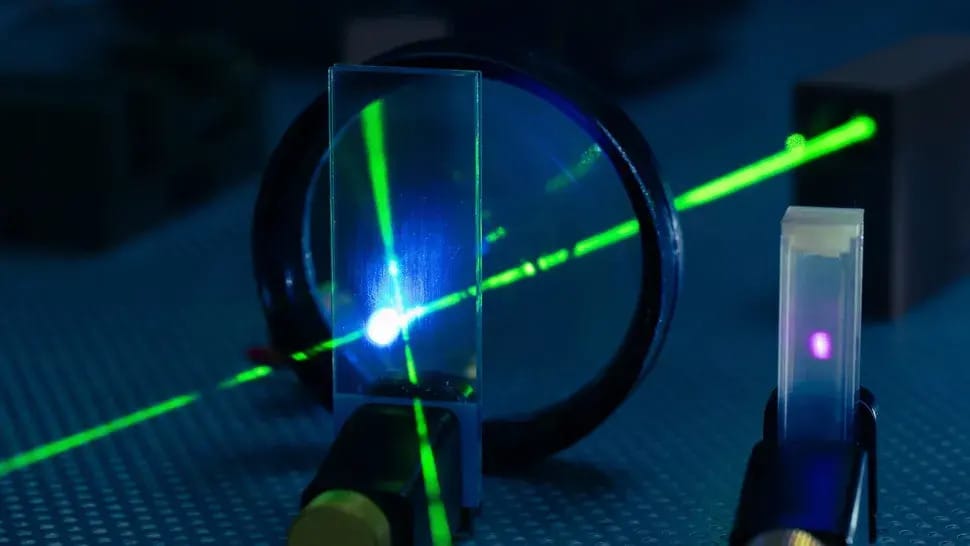
Researchers at the University of Cambridge and the University of Manchester have developed a diagnostic technique that uses pulses of infrared light to detect cancer-linked molecular signatures in blood. The system analyzes how light interacts with biomolecules like proteins and lipids, generating unique “spectral fingerprints” that indicate the presence of cancer. Unlike traditional tests, this method is non-invasive, fast, and requires no dyes, labels, or pre-processing—making it both scalable and clinic-friendly.
What sets this approach apart is the integration of AI, which interprets the light-based data with impressive precision. In early trials, the system distinguished between healthy and cancerous samples across multiple cancer types. The potential applications for human and veterinary medicine are significant: fast, low-cost cancer screening that could fit into a routine wellness exam—no imaging suite or biopsy required.
🧠 Why It Matters:
✅ Early Detection Revolution – Could shift cancer diagnosis from reactive to proactive
✅ Non-Invasive & Scalable – Enables low-cost screening even in general practice
✅ Cross-Species Potential – Offers new tools for pets, exotics, and wildlife health
💬 Join the Conversation:
Could this become part of routine wellness screening in vet med?
How might it change workflows for oncology teams?
What regulatory barriers could delay adoption?
🙌🏼 Impressive Animals 🐾
🐢 Four Critically Endangered Galápagos Tortoises Hatch at the Philadelphia Zoo
📝 By Caitlin McCafferty | April 11, 2025 | Source: DVM360 🔗 Read More
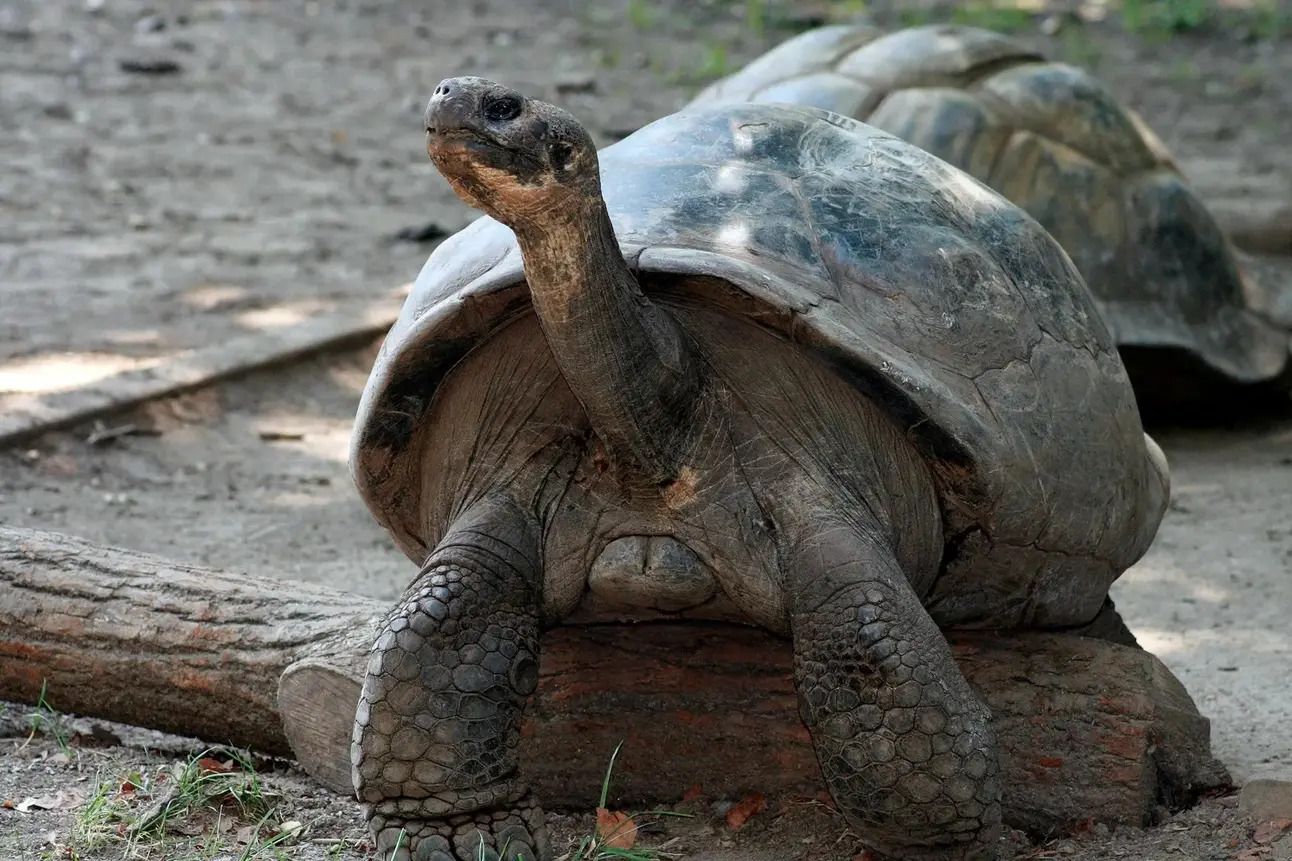
Mommy at the Philadelphia Zoo (Image courtesy of the Philadelphia Zoo)
🔍 The Scoop:
In a historic first for the Philadelphia Zoo, four Western Santa Cruz Galápagos tortoises hatched earlier this year—the first successful hatching of this species in the zoo’s 150+ year history. The parents, aptly named Mommy and Abrazzo, are both estimated to be around 100 years old. Remarkably, Mommy became the oldest known first-time mother of her species. Prior to these hatchlings, only 44 Western Santa Cruz Galápagos tortoises were housed in U.S. zoos. Globally, the wild population is estimated at approximately 3,400 individuals.
The hatchlings are part of the Association of Zoos and Aquariums’ Species Survival Plan, aimed at preserving genetically valuable and endangered species. Mommy laid 16 eggs in November 2024; the four that have hatched were incubated at temperatures likely to produce females. The zoo’s animal care team continues to monitor the remaining eggs for potential hatching. The young tortoises, each weighing between 70–80 grams, are currently housed behind the scenes and are scheduled to make their public debut on April 23, coinciding with the 93rd anniversary of Mommy’s arrival at the zoo.
This achievement underscores the zoo’s commitment to conservation and the importance of collaborative efforts in species preservation. The successful hatching not only contributes to the genetic diversity of the species but also serves as an inspiration for ongoing conservation initiatives worldwide.
💬 Join the Conversation:
Should conservation breeding play a larger role in clinical veterinary training?
How can we support more success stories like this across zoos?
What’s the next frontier for veterinary-led species recovery?… looking at you, Colossal Biosciences.
📣 Support Vet to the Future!
Love this newsletter? Buy me a coffee and support my work! ☕ ko-fi.com/rossimiano
📢 Want to sponsor Vet to the Future? Let’s talk!
You're still here? Awesome. Since you're clearly a newsletter connoisseur, here's another one I think you'll appreciate.
|

🎬 Closing Thoughts
This issue shows how interconnected our futures are—between species, across industries, and through technologies that were science fiction only a few years ago.
Whether it’s helping dogs warn us of disease, decoding dolphin speech, or scanning blood for cancer in seconds, we’re witnessing a transformation in how we understand and serve life on this planet.
As always, stay curious and stay scrappy. The future is already here—it just hasn’t made it to every clinic yet
Cheers,
— Ross
📩 Want to submit a story? Let’s connect!
Reply