- Vet to the Future
- Posts
- 🐀 The Hero Rats, the Eye Implant, and the AI Stethoscope
🐀 The Hero Rats, the Eye Implant, and the AI Stethoscope
From rodents sniffing out land mines to implants that beam sight straight to the retina, this week’s breakthroughs show how animals, AI, and innovation are reshaping both veterinary and human medicine.

Ross Massimiano, DVM
September 10, 2025
Issue #22 | Wednesday, September 10, 2025 | ⏳ Read Time: ~9 Minutes | 1,966 Words
👋 Welcome to Vet to the Future
This week’s issue blends the practical with the extraordinary. We’ll meet the so-called “hero rats” that are saving lives by detecting both land mines and tuberculosis. We’ll see how AI is finding its footing in veterinary clinics, with tools like stethoscopes that can diagnose in seconds and scribes that ease documentation burdens. And we’ll look to the frontiers of biotech, including a futuristic eye implant that bypasses corneal blindness by projecting images straight onto the retina.
Beyond the lab, we’ll also explore Ice Age mysteries, water-walking robots, and the artistry of wildlife photography that inspires us to protect the world we share.
⚡ Quick Hits: Your Fast Facts Roundup
🤖 Veterinary AI meeting looks for clinical value in data
Veterinary leaders debate how to measure AI’s real diagnostic and workflow impact. 🔗 Read More
🦴 Mysterious bone disease ravaged Brazil’s giant dinosaurs
Fossil studies reveal widespread bone disease may have hastened extinction. 🔗 Read More
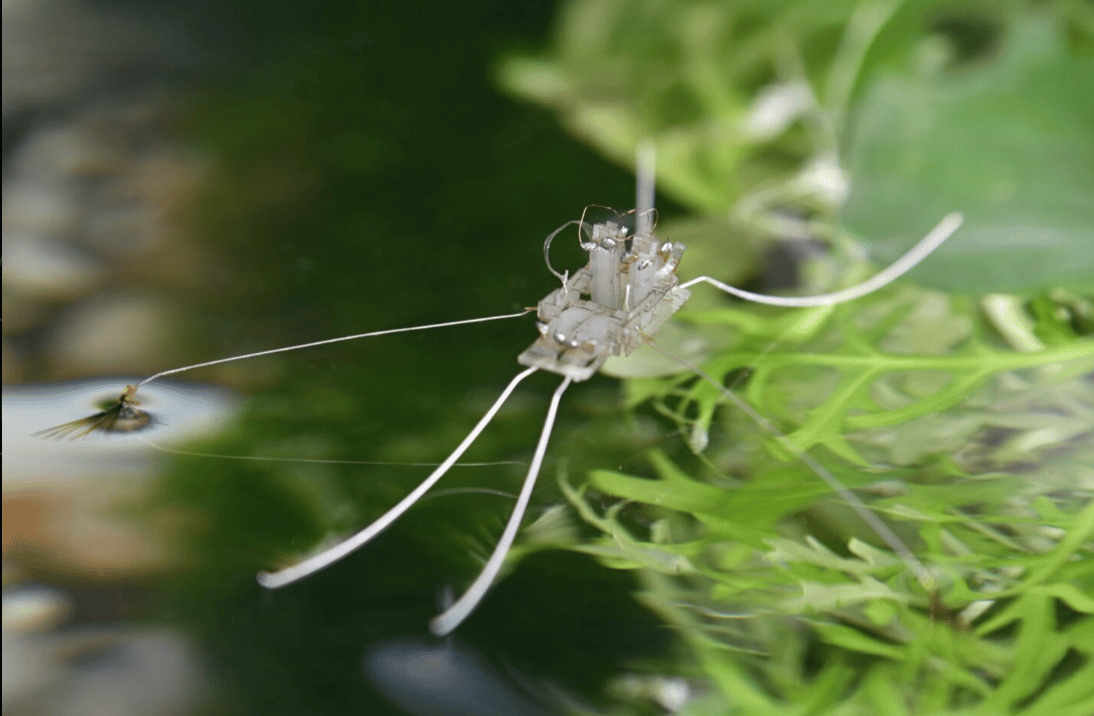
🌊 A robot walks on water thanks to evolution’s solution
Engineers mimic water striders to design robots that skim across ponds. 🔗 Read More
❤️ AI stethoscope detects three heart conditions in 15 seconds
A pocket device rapidly diagnoses murmurs and arrhythmias with high accuracy. 🔗 Read More
⭐ “Hero rats” detect land mines, TB
Rodents are deployed worldwide to locate hidden dangers and disease. 🔗 Read More
👁️ Futuristic eye implant beams images straight to the retina
A corneal-bypass device restores vision by projecting light directly. 🔗 Read More
📸 Wildlife Photographer of the Year serves up stunning visual feast
A preview gallery teases the striking images set for October’s award showcase. 🔗 Read More
🐋 The larger the cetacean, the more stationary their sleep?
New research links whale size with more sedentary rest behaviors. 🔗 Read More
🍗 H5N1 in Raw Pet Food: Out of Sight, But Still Killing
Avian flu traces in raw diets highlight ongoing zoonotic risks. 🔗 Read More
🪱 Automated analysis of C. elegans behavior by LabGym
An open-source AI platform decodes worm behaviors for neuroscience research. 🔗 Read More
📝 Major NHS AI-scribe trial shows ‘transformative’ patient benefits
AI scribes cut documentation time and ease clinical burnout in hospitals. 🔗 Read More
💡 AI is everywhere in healthcare now – but how do patients feel?
Surveys reveal optimism, skepticism, and trust gaps around medical AI. 🔗 Read More
🐖 AI for porcine gastrointestinal infectious diseases
A multimodal diagnostic model identifies swine pathogens with high accuracy. 🔗 Read More
⭐ A starfish apocalypse: bacterium behind billions of deaths
Marine biologists identify the culprit in mass sea star die-offs. 🔗 Read More
🛸 Paper suggests Earth may have been terraformed
A controversial study speculates on ancient extraterrestrial engineering. 🔗 Read More
🧠 Pill may help heal the brain after stroke or injury
Researchers test a drug that could accelerate neurological recovery. 🔗 Read More
📏 We’ve driven animals in two shocking directions in 1,000 years
Humans have made wild species smaller and domestic ones larger. 🔗 Read More
🐟 New method for oral dosing in fish behavior studies
Scientists design a vehicle for safe, non-invasive drug delivery. 🔗 Read More
🤰 AI-enabled pregnancy ultrasound to be trialled in NHS hospitals
Algorithms help guide fetal imaging and interpretation in real time. 🔗 Read More
👩⚕️ 8 Digital Health Technologies Transforming the Future of Nurses
Wearables, AI, and robotics are reshaping the nursing profession. 🔗 Read More
📊 Top takes on AI from Health Datapalooza 2025
Industry leaders share their biggest lessons on medical AI adoption. 🔗 Read More
🐴 Genetically edited horses kick up ethical debate
Gene editing in equines sparks controversy over welfare and fairness. 🔗 Read More
🐕 Nonprofit opens vet clinic for elderly animals
A community initiative offers care for senior pets in need. 🔗 Read More
🧗 Veterinarian’s climbing rescue of boy from park monorail goes viral
A vet’s quick thinking and courage earn national admiration. 🔗 Read More
🤿 Deep Dives: Big Stories, Bigger Impact
Veterinary AI meeting looks for clinical value in data
📝 R. Scott Nolen | September 2, 2025 | AVMA News | 🔗 Read More

The Scoop:
At a recent AVMA gathering, leaders in veterinary medicine turned the spotlight on artificial intelligence. The discussion went beyond hype to focus on practical benefits: whether AI can reduce diagnostic errors, improve efficiency, and support veterinarians in their daily decision-making. The emphasis was on accountability and measurable outcomes, not just innovation for innovation’s sake.
Stakeholders highlighted the importance of testing tools in real clinics and building trust with practitioners. AI developers were urged to provide transparency in how their models work, while practitioners voiced concerns about liability and patient safety. By setting expectations for rigorous validation, the profession is laying groundwork for future adoption.
🧠 Why it matters:
✅ Better diagnostics – Helps catch subtle or rare conditions earlier.
✅ Clinic support – Gives vets more time with patients and clients.
✅ Trust building – Transparent metrics encourage adoption across the field.
Join the Conversation:
Should veterinary AI tools be regulated like medical devices or treated more like decision-support software?
Mysterious bone disease ravaged Brazil’s giant dinosaurs
📝 Fundação de Amparo à Pesquisa do Estado de São Paulo | September 1, 2025 | ScienceDaily | 🔗 Read More

The Scoop:
Fossils uncovered in Brazil reveal that many giant ground sloths and other prehistoric creatures suffered from metabolic bone disease. These deformities would have impaired their mobility and ability to survive, suggesting that illness—not just climate change or hunting—played a significant role in their extinction.
Researchers point to nutritional deficiencies and environmental stress as possible causes of the widespread disease. This adds complexity to the story of megafaunal collapse at the end of the Ice Age, showing that multiple interacting factors likely reshaped ecosystems.
🧠 Why it matters:
✅ Extinction insights – Shows health crises may drive species collapse.
✅ Parallels today – Mirrors vulnerabilities seen in stressed wildlife populations.
✅ One Health context – Links nutrition, environment, and disease risk.
Join the Conversation:
How can lessons from ancient diseases guide modern wildlife conservation?
A robot walks on water thanks to evolution’s solution
📝 Elizabeth Rayne | September 2, 2025 | Ars Technica | 🔗 Read More
The Scoop:
Inspired by water striders, engineers have built a robot that walks on water without sinking. By mimicking insect biomechanics rather than brute force engineering, the team created a lightweight design that exploits surface tension in clever ways. The result is a machine that glides across ponds with insect-like grace.
This innovation shows how looking to evolution can fuel engineering breakthroughs. Instead of reinventing the wheel, researchers are finding success in copying nature’s designs, which have been refined over millions of years. The applications for such biomimicry extend from environmental monitoring to disaster response.
🧠 Why it matters:
✅ Biomimicry proof – Nature continues to inspire robotics design.
✅ Practical uses – Robots could monitor fragile wetland ecosystems.
✅ Veterinary crossover – Biomechanics insights inform animal rehab research.
Join the Conversation:
Which animal’s movement should robotics try to copy next?
AI stethoscope detects three heart conditions in 15 seconds
📝 Jordan Sollof | September 3, 2025 | Digital Health | 🔗 Read More

The Scoop:
A handheld AI-powered stethoscope can now detect atrial fibrillation, heart murmurs, and valve disease in just 15 seconds. Trials suggest the device is faster and often more reliable than traditional auscultation, raising the possibility of transforming frontline diagnostics.
For veterinarians, this technology could prove invaluable. It lowers the barrier for detecting subtle cardiac abnormalities, supports younger clinicians learning auscultation, and offers rapid reassurance—or escalation—for worried clients. It’s a step toward democratizing access to advanced diagnostic tools.
🧠 Why it matters:
✅ Faster triage – Life-threatening cases flagged in seconds.
✅ Training tool – Supports new veterinarians mastering heart sounds.
✅ Greater access – Extends cardiology-grade screening to underserved areas.
Join the Conversation:
Would you trust an AI device to call a murmur before you could hear it yourself?
“Hero rats” detect land mines, TB
📝 Jack Denton | September 4, 2025 | Associated Press | 🔗 Read More

The Scoop:
For years, African giant pouched rats have been trained to sniff out land mines, saving countless lives in post-conflict regions. Now their talents are being expanded to detect tuberculosis, leveraging their extraordinary olfactory abilities for global health. Unlike machines, the rats work quickly, cost little to maintain, and thrive in varied environments.
The program behind these “hero rats” shows the power of nontraditional working animals in addressing global challenges. By pairing careful training with natural abilities, researchers have unlocked new frontiers for how animals can support both human and veterinary medicine. Their success underscores that solutions to complex problems often come from unexpected places.
🧠 Why it matters:
✅ Public safety – Helps clear land mines that endanger communities.
✅ Global health – Detects TB more efficiently in low-resource settings.
✅ Animal partnership – Highlights the value of animal abilities in applied science.
Join the Conversation:
Could more animal species be trained to solve human and veterinary health problems?
Futuristic eye implant beams images straight to the retina
📝 Paul McClure | September 2, 2025 | New Atlas | 🔗 Read More

The Scoop:
Researchers have unveiled a proof-of-concept eye implant that bypasses damaged corneas by projecting light directly onto the retina. The device effectively sidesteps one of the most common causes of blindness—corneal opacity—by skipping the cornea entirely and delivering a visual signal straight to the back of the eye.
While still early in development, the implant represents a bold leap in restoring sight. If refined, it could revolutionize treatment for millions of people worldwide who are blind due to corneal disease. The innovation also raises broader questions about where the line between therapy and enhancement might be drawn in future human and veterinary ophthalmology.
🧠 Why it matters:
✅ Vision restoration – Offers hope for patients without corneal transplant options.
✅ Future tech – Could inspire crossovers in animal eye disease treatment.
✅ Bioethics frontier – Pushes debate on the limits of human enhancement.
Join the Conversation:
Would you consider an implant like this if it restored vision—or even enhanced it?
🙌🏼 Impressive Animals 🐾
Wildlife Photographer of the Year serves up stunning visual feast
📝 Michael Franco | September 2, 2025 | New Atlas | 🔗 Read More

The Scoop:
Now in its 61st year, the Wildlife Photographer of the Year competition continues to set the gold standard for nature photography. Ahead of the October awards ceremony at the Natural History Museum in London, organizers have released a preview of some of the 100 images that will be showcased. Drawn from a record-breaking 60,636 entries, the preview offers a tantalizing glimpse of the artistry and storytelling that will define this year’s exhibition.
The competition crowns winners across multiple categories—including Grand Title and Young Grand Title—and has become one of the most celebrated platforms for wildlife photography worldwide. Jury chair Kathy Morgan noted that the images highlight our “relationship to the natural world, in all its complexity and splendour,” underscoring the event’s dual role as both an artistic celebration and a call to conservation action.
🧠 Why it matters:
✅ Drives conservation – Inspires public interest in protecting species and habitats.
✅ Global stage – Elevates wildlife stories to one of the most visible platforms worldwide.
✅ Cultural connection – Brings biodiversity into galleries and living rooms across the globe.
Join the Conversation:
What kind of wildlife photo—intimate, dramatic, or humorous—most moves you to care about conservation?
💊℞: Dose of Humor


📣 Support Vet to the Future!
Love this newsletter? Buy me a coffee and support my work! ☕ ko-fi.com/rossimiano
📢 Want to sponsor Vet to the Future? Let’s talk!
You're still here? Awesome. Since you're clearly a newsletter connoisseur, here's another one I think you'll appreciate.
|

🎬 Closing Thoughts
The stories this week remind us that the boundary between animal instinct, human innovation, and AI assistance is dissolving. Rats become lifesaving partners, robots copy insects to skim across ponds, and devices beam sight into the blind. Each advance underscores a truth: the future of medicine is not about replacing nature, but about learning from it, amplifying it, and sometimes rediscovering what it already does best.
As veterinary professionals and animal enthusiasts, we’re positioned at this crossroads—where biology, technology, and compassion converge. Let’s carry that sense of wonder forward into every exam room, every conversation, and every new idea.
Cheers,
— Ross
📩 Want to submit a story? Let’s connect → [email protected]!
Reply