- Vet to the Future
- Posts
- 🦜 The SMARTDOG, the Nanogel, and the Dance-Off
🦜 The SMARTDOG, the Nanogel, and the Dance-Off
Meet AI tools transforming vet care, nanogels revolutionizing treatment—and a cockatoo stealing the show.

Ross Massimiano, DVM
August 13, 2025
Issue #19 | Wednesday, August 13, 2025 | ⏳ Read Time: ~7 Minutes | 1,329 Words
👋 Welcome to Vet to the Future
This week, we’re watching AI and advanced materials step confidently into the veterinary space. From ultrasound algorithms that can track fluid in a dog’s lungs, to CT scans analyzed by deep learning, to nanogels delivering precision treatments, these innovations are setting the stage for faster, smarter care. We’ll also meet a feathered friend who can pull off 30 different dance moves—and maybe outshine us on the dance floor.
⚡ Quick Hits: Your Fast Facts Roundup
🐕 SMARTDOG AI Tracks Lung Fluid in Dogs
Machine-assisted ultrasound recognition spots B-lines in canine lungs, enabling faster detection of pulmonary issues. 🔗 Read More
🩻 AI Reads Canine CT Scans for Liver Lesions
Automated segmentation tech helps vets detect and measure hepatic focal lesions with greater accuracy. 🔗 Read More
🤖 AI Chatbot Wins Pet Care Innovation Award
An AI-powered virtual assistant earns recognition for guiding pet owners through health questions and triage. 🔗 Read More
🧪 Nanogels Set to Transform Veterinary Drug Delivery
Recent advances highlight nanogels’ potential to deliver drugs with precision, improving outcomes and minimizing side effects. 🔗 Read More
🎶 Cockatoos Know 30 Dance Moves
Researchers documented a surprising repertoire of choreography—proof that these birds aren’t just mimicking, they’re inventing. 🔗 Read More
🧠 AI Model for Brain Monitoring Heads to the ICU
A new EEG foundation model aims to detect neurological decline in ICU patients before symptoms appear. 🔗 Read More
🪝 AI Designs Barnacle-Like Super Glue
Inspired by marine life, this adhesive grips underwater surfaces, opening doors for surgical and marine applications. 🔗 Read More
🐇 Virus Causes Rabbits to Sprout Facial Quills
A newly identified virus is linked to unusual facial quill growth in rabbits, raising conservation and biosecurity concerns. 🔗 Read More
🦖 “Wonder Reptile” Discovery Rewrites Feather Origins
Fossil evidence reveals a reptile with proto-feathers predating birds, reshaping evolutionary timelines. 🔗 Read More
🦟 mRNA Vaccine Stops Malaria Transmission
A new mRNA vaccine candidate blocks malaria parasite transmission in mosquitoes under lab conditions. 🔗 Read More
🪲 Jewel Wasp Larvae Slow Their Biological Clock
These parasites pause development when food is scarce, slowing molecular aging by about 30%. 🔗 Read More
🔦 MIT’s Light-Activated Body Glue Could Replace Sutures
A blue-light activated polymer seals wounds in seconds, with potential vet applications. 🔗 Read More
🧬 Ozempic May Reverse Aging
Early, not-yet-peer-reviewed research suggests GLP-1 drugs like Ozempic could reduce biological age, though more studies are needed. 🔗 Read More
💉 Young Blood & Bone Marrow Proteins Rejuvenate Skin
Mouse studies show restored elasticity and thickness from youthful plasma and marrow components. 🔗 Read More
💊 Male Contraceptive Pill Clears Safety Trial
A new formulation passes human safety trials without hormonal side effects. 🔗 Read More
🪥 Needle-Free Vaccine Doubles as Dental Floss
A dissolvable fiber could deliver vaccines while cleaning teeth—yes, really. 🔗 Read More
💎 Open-Source Quantum Sensor Runs on a Special Diamond
Researchers use a rare diamond structure to build a powerful, shareable sensing tool. 🔗 Read More
🤿 Deep Dives: Big Stories, Bigger Impact
SMARTDOG: AI-Powered Ultrasound for Canine Lungs
📝 Frontiers in Veterinary Science | Aug 2025 | 🔗 Read More

The Scoop:
The SMARTDOG system is a leap forward in point-of-care imaging for dogs, using AI to automatically detect and track B-lines—hallmarks of fluid buildup in the lungs. This not only allows earlier detection of pulmonary edema but also removes much of the subjectivity from interpreting ultrasound images. By standardizing interpretation, the tool ensures that veterinarians with varying ultrasound experience can reach the same conclusions.
This kind of consistency is invaluable in emergency situations, where minutes can mean the difference between recovery and decline. SMARTDOG’s real-time processing enables veterinarians to adjust treatment immediately, whether that means diuretics, oxygen therapy, or further diagnostics, leading to more efficient and effective patient care.
🧠 Why it matters:
✅ Early intervention – Detect lung disease before severe symptoms.
✅ Consistency in care – Reduce reliance on operator experience.
✅ Point-of-care speed – Deliver results in real time during exams.
Automated AI CT Analysis of Canine Liver Lesions
📝 Frontiers in Veterinary Science | Aug 2025 | 🔗 Read More
Image suggestion: A split-screen of a canine abdominal CT scan—one side raw, the other segmented in bright colors by AI highlighting liver lesions.

The Scoop:
This study demonstrates how AI can take the complexity out of interpreting canine liver CT scans by automatically segmenting hepatic focal lesions. The technology doesn’t just identify lesions—it measures them in three dimensions, providing volumetric analysis that aids in both diagnosis and monitoring over time.
The result is faster, more objective diagnostics that don’t depend solely on human interpretation. For clinicians, this means being able to plan surgeries more accurately or adjust medical therapy sooner, potentially improving prognosis in cases of hepatic disease.
🧠 Why it matters:
✅ Objective data – Standardized lesion measurement improves tracking.
✅ Time savings – Cuts radiology review time significantly.
✅ Better planning – Informs surgical and therapeutic decisions.
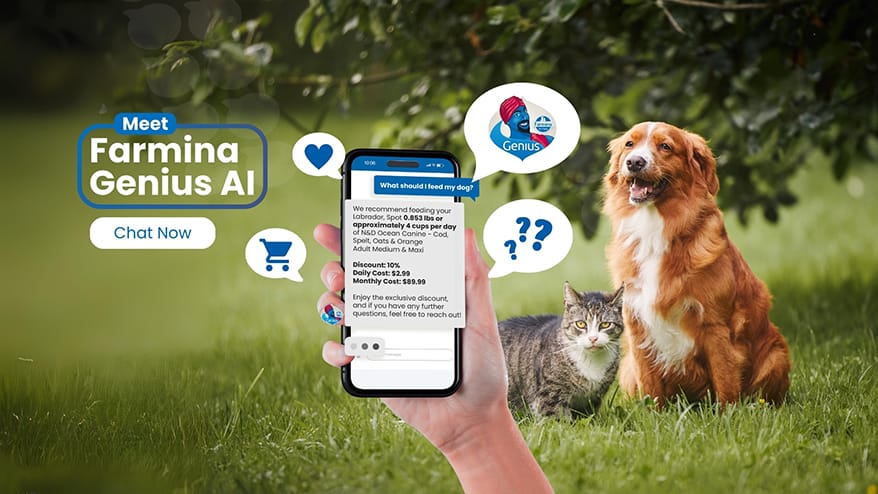
AI Chatbot for Pet Nutrition
📝 Abi Bautista-Alejandre | Aug 8, 2025 | DVM360 🔗 Read More
The Scoop:
The award-winning AI chatbot is designed to give pet owners instant, reliable answers to their health questions—whether it’s about symptoms, nutrition, or when to seek emergency care. Its conversational design makes it approachable for all users, and it integrates with telehealth platforms to connect owners with veterinarians when necessary.
By reducing unnecessary in-clinic visits, the chatbot frees up veterinary resources for urgent cases while helping owners arrive at appointments better informed. This strengthens the vet-client relationship and ensures patients receive timely, appropriate care.
🧠 Why it matters:
✅ Improves access – Pet owners get quick answers anytime.
✅ Reduces strain – Fewer unnecessary clinic visits.
✅ Enhances care – Owners arrive better prepared for appointments.
Nanogels in Veterinary Medicine
📝 Maria Laura Soriano Pére et al | Aug 7, 2025 | Veterinary Research 🔗 Read More

The Scoop:
Nanogels are emerging as one of the most versatile drug delivery platforms in veterinary medicine. These microscopic, water-rich polymer networks can encapsulate a wide variety of drugs and release them in response to changes in temperature, pH, or other physiological triggers. This adaptability allows for precision targeting of tissues or pathogens, minimizing side effects and maximizing therapeutic benefits.
In practice, nanogels could mean fewer injections, better compliance, and the ability to treat complex conditions with greater control over dosing. Whether for oncology, infectious disease, or chronic conditions, they represent a leap toward truly personalized veterinary care.
🧠 Why it matters:
✅ Targeted delivery – Delivers drugs directly to the target tissue, reducing side effects.
✅ Versatile platform – Works with a wide range of drugs.
✅ Controlled release – Maintains therapeutic levels longer.
🙌🏼 Impressive Animals 🐾
Cockatoos Can Bust 30 Different Moves
📝 Jennifer Ouellette | Aug 6, 2025 | Ars Technica | 🔗 Read More

The Scoop:
Cockatoos have long been known for their ability to mimic human speech, but this study reveals they’re also capable of sophisticated, spontaneous choreography. Across dozens of recorded sessions, researchers documented 30 distinct dance moves, from wing flares to synchronized head bobs, often timed to music.
This creative expression suggests not just mimicry but genuine innovation in movement—something rarely seen in the animal kingdom. It also hints at neurological similarities between birds and humans when it comes to rhythm perception and motor coordination.
🧠 Why it matters:
✅ Cognitive insight – Adds to our understanding of avian intelligence.
✅ Enrichment ideas – Supports music-based stimulation in captive care.
✅ Conservation impact – Highlights the richness of behaviors worth protecting.
💊℞: Dose of Humor


📣 Support Vet to the Future!
Love this newsletter? Buy me a coffee and support my work! ☕ ko-fi.com/rossimiano
📢 Want to sponsor Vet to the Future? Let’s talk!
You're still here? Awesome. Since you're clearly a newsletter connoisseur, here's another one I think you'll appreciate.
|

🎬 Closing Thoughts
This week’s issue highlights how technology and biology constantly learn from each other. AI tools are giving vets unprecedented diagnostic precision, while nanogels may soon make targeted drug delivery the norm. And sometimes, nature shows us its own flair for innovation—like a cockatoo with a better repertoire than most wedding DJs.
Cheers,
— Ross
📩 Want to submit a story? Let’s connect → [email protected]!
Reply